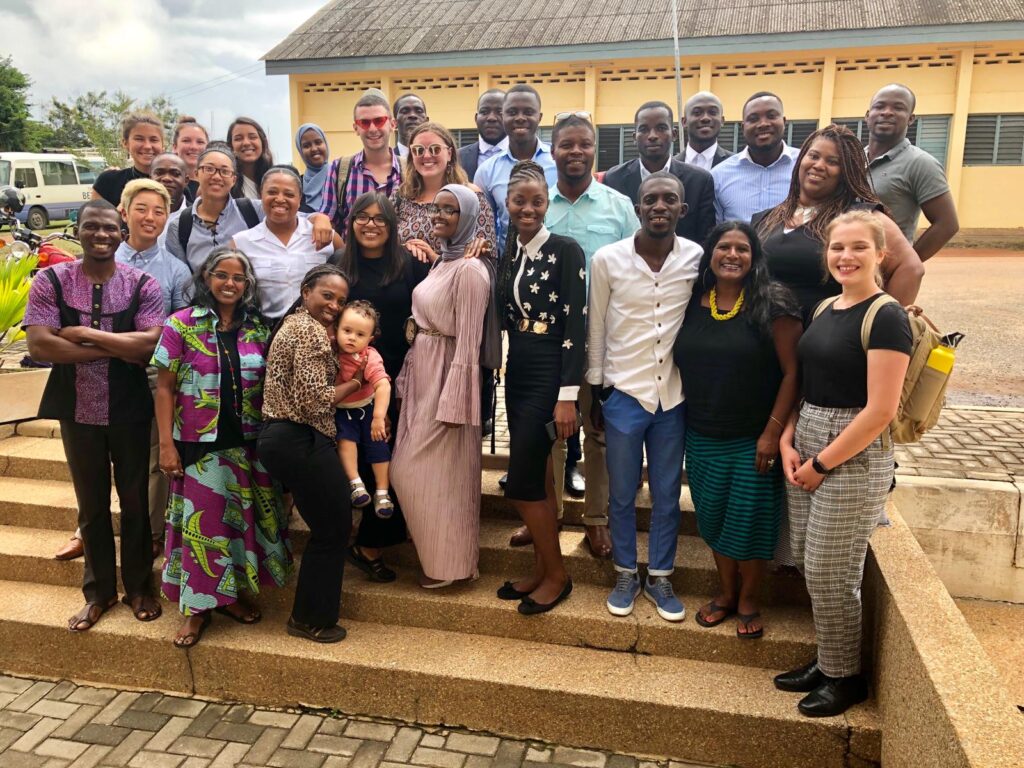
Global Reciprocity Network

Global Reciprocity Network

Collaborating More Equitably in an Unequal World

  • home
  • our purpose
  • get to know us
  • our stories
  • contact

admin

Anu Taranath

October 6, 2022 by admin

Myself, program staff, and students visit 12th century temples in South India.

Profile

Hello, great to meet you! I’m called Anu, and I’m passionate about questions. I love that a good question can make us pause, rethink and revise what we know. Sometimes a question absolutely needs to be answered, and other times, not at all. Questions keep my brain nimble, and encourage me to stay curious and engaged.

As the daughter of immigrants who has grown up between two cultures, I often draw on my personal experience as a way to connect with and amplify the voices of those who have historically not been heard.

As a scholar and academic at the University of Washington, I also know that racial equity work is challenging, emotional, institutional, and personal. I’ve taught about global issues, race, gender, identity, and equity to thousands of students, presented at high-profile as well as more humble events, and collaborated with social change agents and innovative thinkers around the world. 

In my consultancy practice and as a facilitator, I partner with clients for the long haul and strive to build inclusivity and collaboration, inviting people into conversation.

I’m a cultural in-between and go-between who values nuance as well as clarity.

I bring both passion and expertise to my work as a speaker, facilitator, author and educator. I specialize in issues of racial equity and social change. I believe in dialogue, and invite people to grapple with the challenges of history and navigate our present with curiosity, honesty, and open-heartedness.
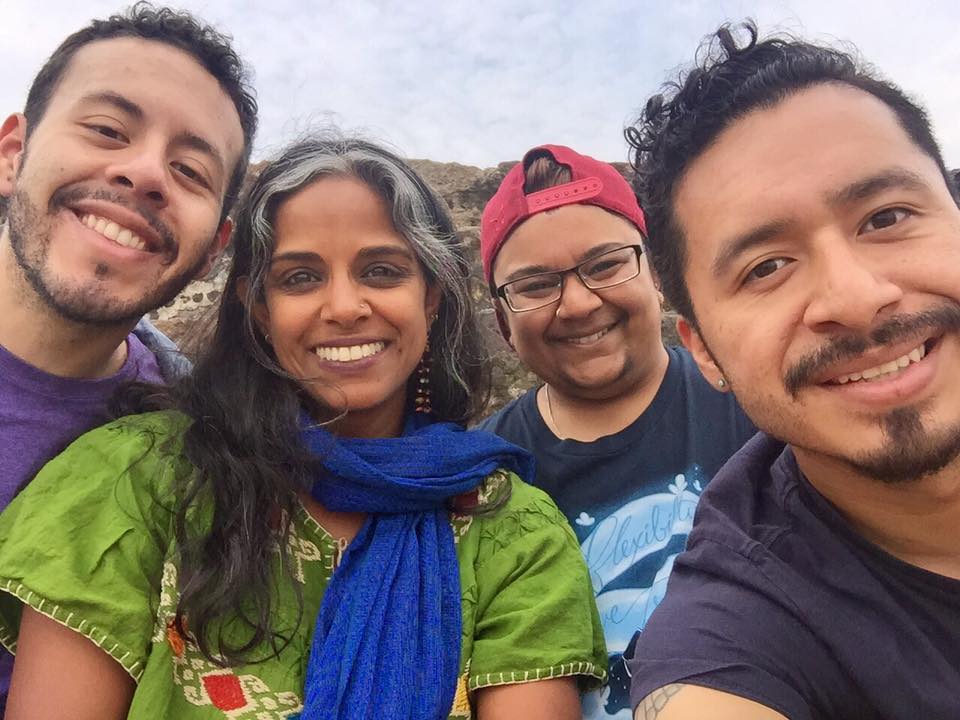
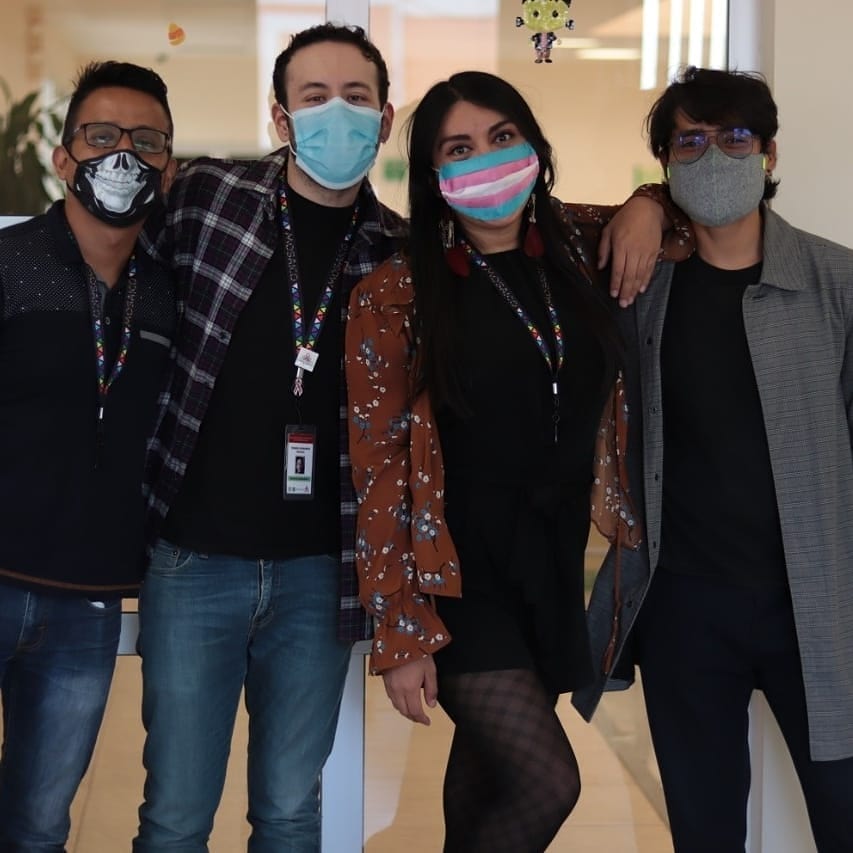
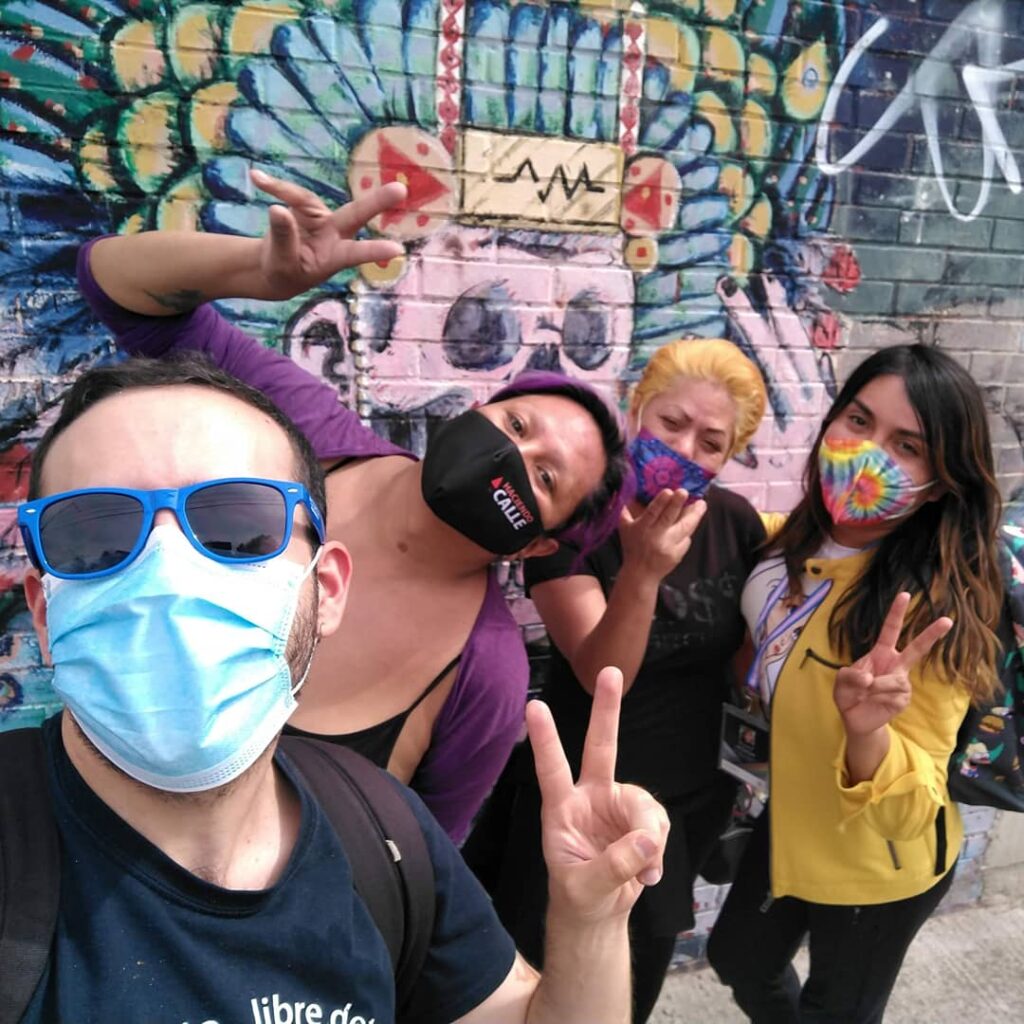
Myself with collaborators and staff from a Mexico program we were a part of

I’m so compelled by the notion that all of us deserve to feel seen and heard in our complex identities and experiences. Each and every one of us.

If all of us did feel more seen and heard, would we then act out our insecurities on others less often?

Would we then have more space in our hearts for true compassion and empathy?

The quest for more care, camaraderie and connection is what drives me each and every day. I’m inspired by the many change-agents I’ve met around the world — ordinary people who are making life a little better for themselves and others in the small pockets of life that they lead.
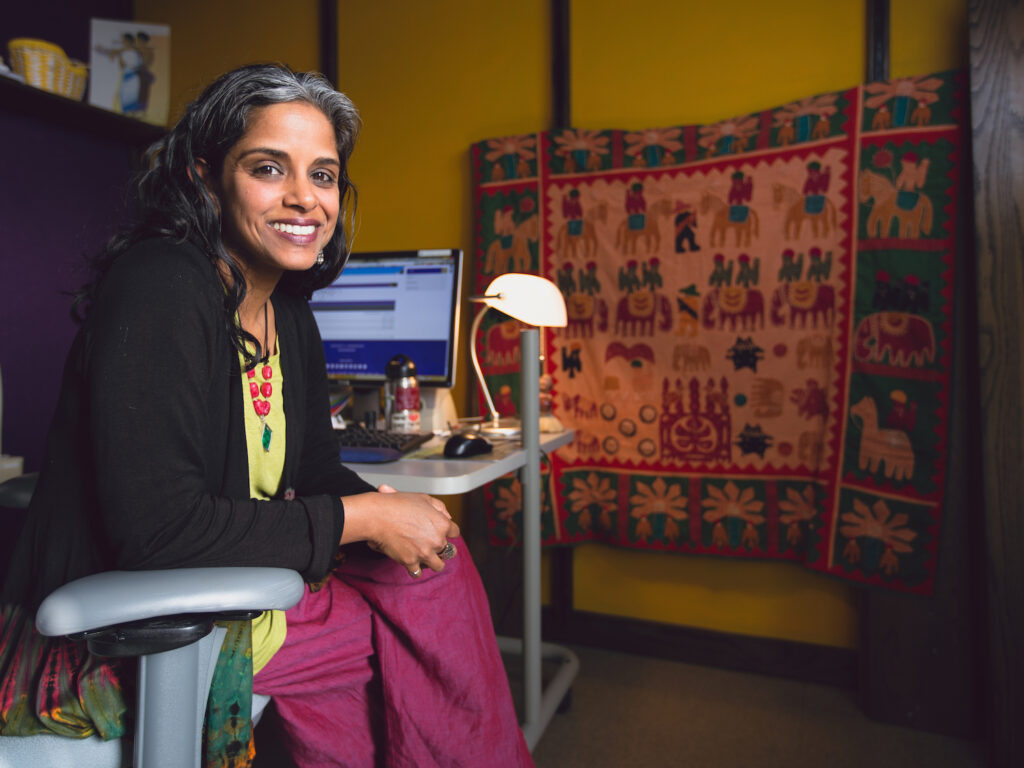
The fact that I get to bring people together to talk about critical personal and social issues feels incredible to me.

We need healthy, productive and engaging dialogue now more than ever. Most of us have been raised with little familiarity and too few tools on how to build authentic relationships across different identities and experiences. This, of course, has deep consequences in our communities both near and far. With some support however, we can create more meaningful connections based on love, grace and friendly curiosity with both ourselves and each other. I love that I get to do this work!

Academic Partners

  • University of Washington
  • Various travel industry and university partners

Fun Facts

What reciprocity looks like for me

Reciprocity to me feels like belonging. It’s when we gather to make a meal and everyone naturally takes on a task that contributes to the whole. Reciprocity in an unequal world is certainly not a given. Deep and abiding connections across race, income, opportunity and global location take time, trust and affection. Reciprocity in the context of my work and especially this international project feels like righting history’s many wrongs, one relationship at a time.

Advice I’d give …

If you want to work in the racial equity and DEI sphere, I’d advise you to get real comfortable with discomfort. Know what discomfort means from the theoretical and social level down to the nervous system and cellular level. This skill will come in handy all the time, each and every day!

If I was an animal, I would be …

A meerkat — they are gregarious animals and social with one another. They work together, communicate, and live in groups of families.

My secret talent is …

I have a toe that bends in fun ways and performs tricks! 🙂

When I was a child, I wanted to be …

A volcano scientist! (Which I later learned is called a geologist!)

My favorite thing to eat is …

I love chaat, Indian snacky street food. Chaat is often salty, sour, spicy and a little sweet — all at once.

My favorite place to to be is …

In a pool swimming slow, relaxed laps

Connect with Anu

instagram
linkedin
website

Connect with Anu’s work

My book on unpacking our baggage about who we are, where we come from, and how much we have.
Beyond Guilt Trips: Mindful Travel in an Unequal World

Filed Under: Our Network, Stories Tagged With: bio, biography, profile, stories

Oppong Nyantakyi

October 5, 2022 by admin Leave a Comment

Profile

I am an open-minded and easy-going person. I tend to think quite analytically and can be observant, which sometimes means I tend to be a bit quiet especially around people I have not met before. I strive to always lead by example and give nothing but my best in everything I do.

I do not like talking about myself unless I must. I have been told that I do not give enough credit to myself as I often downplay my achievements. I am a strong believer in teamwork. I give careful attention to practical details and am always open to new ideas. I like to meet new people, and learning new things.

I like to spend time with people who have positive energy, and I value honesty in my friends. I am focused and driven in my work and can adapt easily, depending on the situation. I love spending time with family and friends. I am a lover of nature and enjoy watching sports.

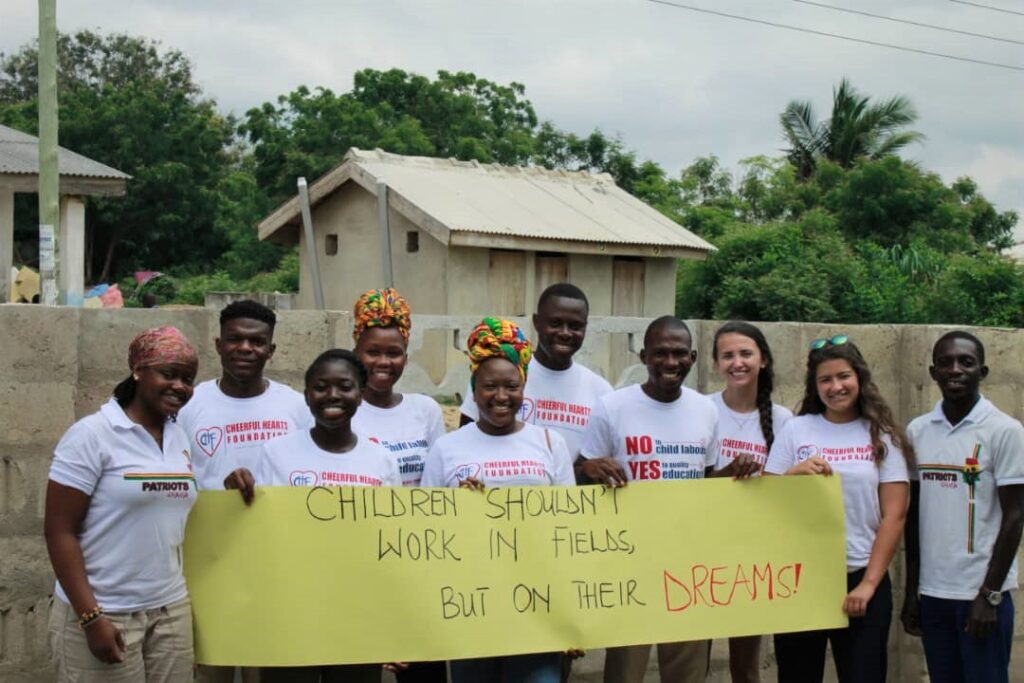
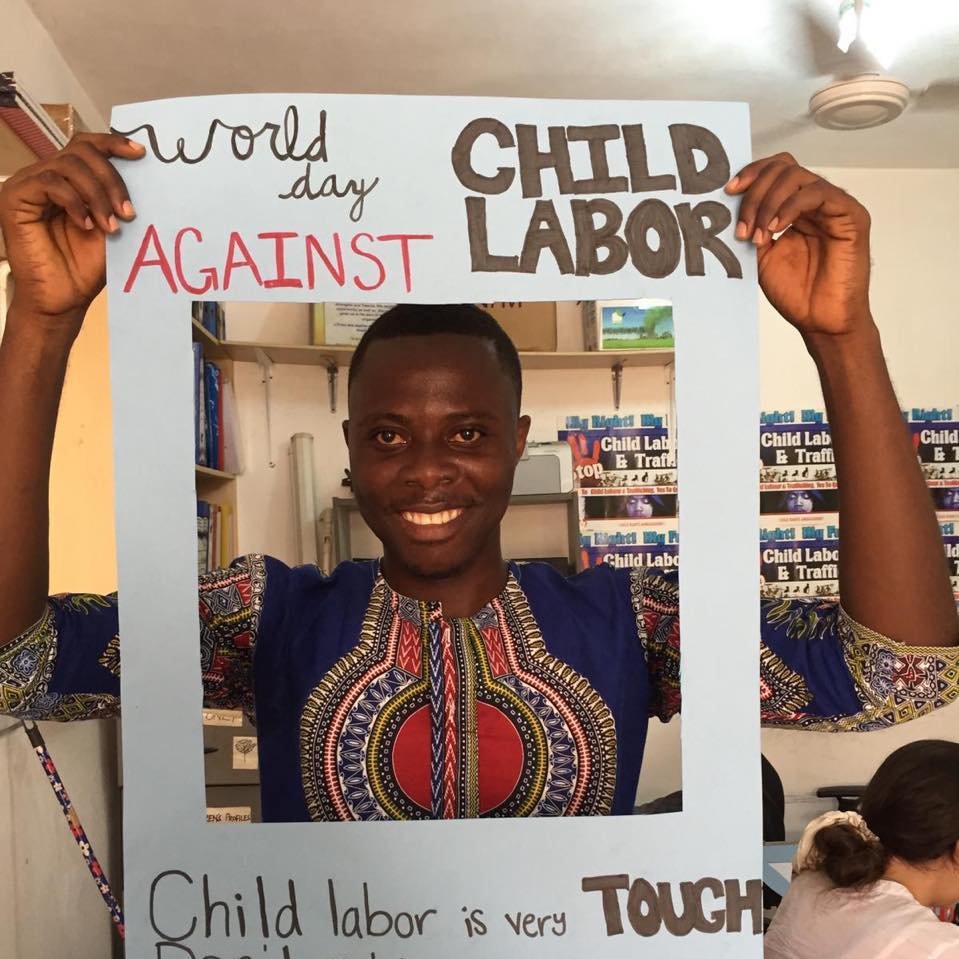
I work with Cheerful Hearts Foundation, a nonprofit, grassroots organization that focuses on combating child labor and trafficking in rural fishing communities within the Central Region of Ghana.

We do this through advocacy, education, and health initiatives as well as child educational support programs to address the root cause of child labour and trafficking. One of the organization’s main aims is to empower youth through skills and leadership training, and sports programs so that they can develop their potential and take positive actions to make sustainable impacts in their communities. We also provide volunteer opportunities that allow people to join and support our efforts to impact sustainable change.

I serve as a project and volunteers coordinator where I actively advocate for the rights of children and oversee that our project activities are effectively developed and implemented. The projects I have worked on are focused on addressing social issues in our local communities that affect child rights, health, and education. I lead project teams to design and implements interventions to promote community education on the rights of children, the dangers of child labor and trafficking, and the importance of education. I also lead projects that promote the delivery of quality education in local schools, and various health outreach programs to promote effective health practice. I coordinate with stakeholders and partners to secure support and cooperation.

I also spend a lot of time monitoring and mentoring my team members, including international and local volunteers and interns. An important aspect of my work is that we work closely with people within the communities in which we serve with due diligence.

I love that I can positively contribute and address some of the social issues in my community and make a positive impact on the lives of people through my work.

My colleagues also motivate me a lot, and they were a big factor in how my passion grew from the start. There is nothing more encouraging than knowing that I am making a difference through my work while engaging with a collaborative team of dedicated and selfless people. 

One of my biggest inspirations is the people in the communities with which I work. I am privileged that I get to hear the stories of people in my community and that they allow me to be part of the solution. I feel fortunate that they share with me their stories about how they navigate life and that I get to connect with people on a deeper level. These stories inspire me to appreciate life every day. 

Another definite highlight of my work is being able to spend time with and motivate the youth and children in my community; they can be so inspiring.

One of my proudest accomplishments was initiating a reading program.

It was through this program that our Student Tutoring And Reading (STAR) club was established, which has supported children in the less privileged communities to cultivate healthy reading habits, enhance reading, and improve their learning. This club allowed a safe and fun learning space for children to go to after school.

I have also initiated the teacher’s training program, which strives to provide practical training for teachers in deprived communities to improve teaching and learning practices. Over 60 teachers have received training and it was exciting to see them implementing what they learned in their classrooms. Many of the teachers participating had never received any formal training before.

Through our advocacy project, we have provided education on the rights of children, child rights law: both local and international, and the importance of education to over 20,000 people, including opinion leaders, teachers, parents and children within three fishing communities in the central region of Ghana. This resulted in higher school enrollment and increased awareness of the dangers and the detrimental impact of child labour and trafficking on children and the community at large.

We have trained and supported over 500 youth in the communities we serve and ultimately empower them to enact positive changes. They are enacting positive changes in their communities not only within the scope of the project but also for years to come in the future. They now have become fully aware of the extent of the social issues in their communities and understood the role they could play as young leaders in social change. 

We have also provided young women with vocational and leadership training through our Women Entrepreneurial and Leadership Development (WELD) program. With this training, we have supported young women at risk of forced labour to gain a lifetime skills which will enable them to: start their business or gain employment, and strengthen their resilience against child labour and trafficking as young leaders for social change.

I feel we all have a responsibility in making the world a better place.

I am not looking to change the world, but at least what I do, can actively contribute to addressing some of the social issues I witness every day. I believe it is not only enough to be just concern about the inequalities and social injustice everywhere. We need positive actions to impact the change we seek so it is important to me that my work can inspire and empower people to take actions geared towards social change. I am happy that my little effort can make a great impact.

You do not have to do a big thing, but I believe a little thing in a great way can make a big difference. There is an African saying: “I am because we all are.” To me, this means that we are all responsible for the world we live in and contribute positively.

Academic Partners

  • University of Washington
  • Louisiana State University
  • University of Kentucky

Fun Facts

What reciprocity looks like for me

To me, reciprocity means dignity and respect for the people that we serve. This could be respecting and valuing their ideas, culture, religion, and beliefs. We should be equals with the people we work with and if we can do that we connect more and work together hand in hand to address the issue. Mutual respect is paramount to realize the positive outcomes we are striving for.

Advice I’d tell people inspired to do work that I do

Never place yourself above the people we are working with. We learn as much as we help in our line of work. Always have an open mindset and adapt to the situation. Ultimately respect is paramount. 

Teamwork and collaboration are key: Different experiences, skills and expertise  — even if little — are essential to achieve the expected goals and make more impact. When you work together with other people, you get the opportunity to: learn more, develop yourself and expand your scope.

Also, be patient. Working with people can be really hard and frustrating, especially when you do not see immediate results. It takes day-by-day and step-by-step to make a difference — there are no easy solutions, and nothing will change overnight. You are contributing to a bigger picture, and this does not happen quickly as we would like it to be.

My secret talent is …

Drawing

My favorite book of all time is …

Things Fall Apart by Chinua Achebe

My favorite hobby is …

Playing football with friends

My favorite thing to eat is …

Ghanaian jollof rice

My favorite place to be is …

Home

Connect with Oppong

email
whatsapp

Filed Under: Our Network, Stories Tagged With: bio, biography, profile, stories

Maanda Ngoitiko

October 4, 2022 by admin

Profile of Maanda Ngoitiko, named an African Visionary Fellow by the Segal Family Foundation in 2019

Profile

I am Maanda Ngoitiko, and I was born in Soitsambu, a small remote village in Ngorongoro in Northern Tanzania. Raised in a closely-knit extended Maasai family, I was one of those troublesome kids, and this is the particular reason I got sent to and stayed in school. 

When I’m not working, I am quite occupied tending to my really big family of so many children (6 of my own), our livestock, and as of recently, my vegetable garden. 

I am an outgoing person, and every now and then, I make time to link up and touch base with my close friends, usually over a mug of milk tea or Nyama Choma (roasted beef/goat/mutton, a local delicacy and a personal favorite).

After completing my primary school education, I successfully refused a second attempt at a forced arranged marriage.

The late Hon. Lazaro Parkipuny, then a member of the Parliament of Ngorongoro, and with the help of my cousin brother, Parkipuny arranged for my escape in the middle of the night, took care of me and sent me off for further studies. 

Parkipuny was very hard-working, knowledgeable, and so passionate in his advocacy for pastoralists. He believed in me, and after I earned an advanced diploma in developmental studies in Dublin, I came back to work with him at KIPOC, an NGO he started to help the pastoralists protect their Indigenous land and improve their economic status. 

Working with him, I learned so much and it was while at KIPOC that I saw the need for and gained practical skills to start a women-centered organization.

Tanzania

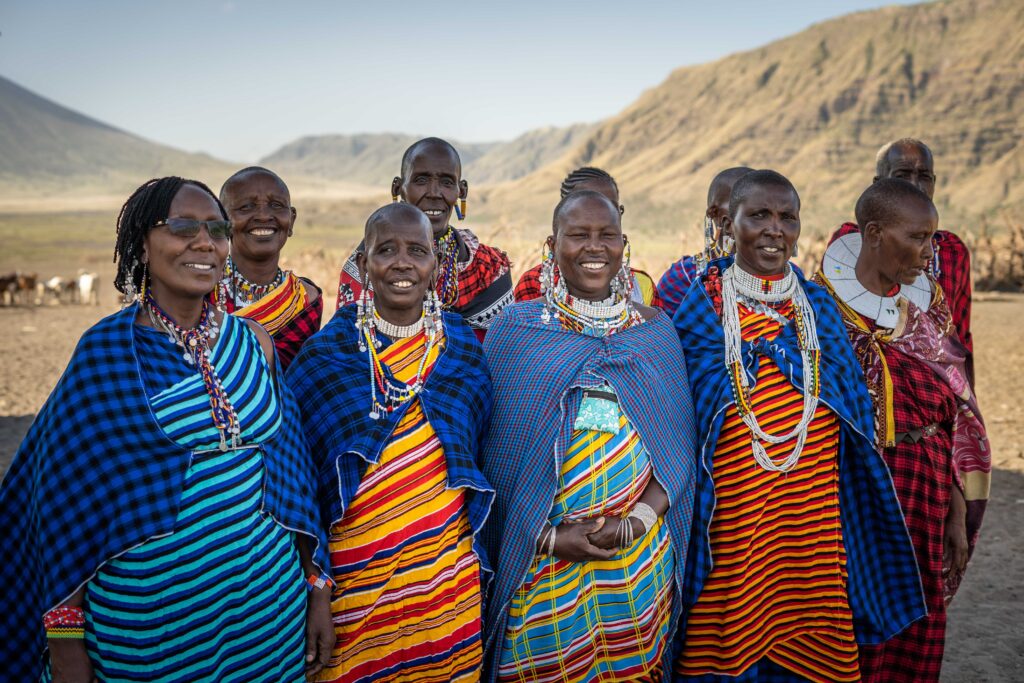
In 1997, I was one of 10 Maasai women who founded Pastoral Women’s Council (PWC).

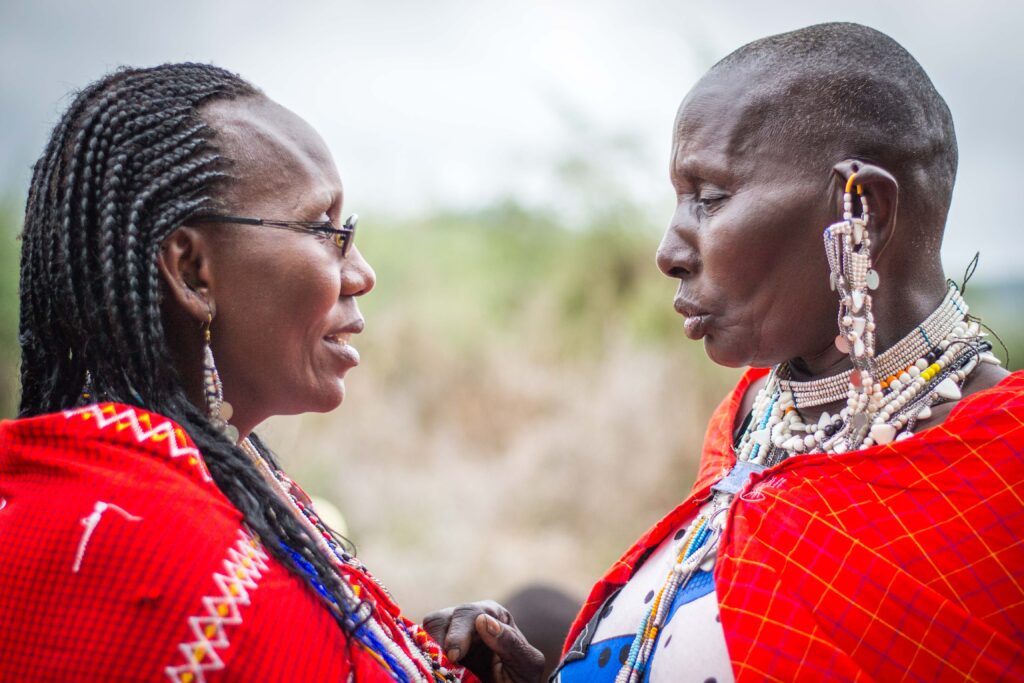
In PWC’s early days,  my fellow founders and I walked for miles and miles, reaching out to women in different villages across the Ngorongoro district with early sensitization meetings about the idea of PWC — women’s rights and girls’ education. We faced some difficulties, with men feeling like we were trying to make their daughters and wives defiant and with the majority of the women being reluctant to go up against community expectations. 

Slowly we won them over and built momentum and now we have 10,000+ members. We are devoted to work with and for pastoralist women and girls in northern Tanzania to ensure their rights and voices are respected, they are economically empowered, and they have access to quality social services.

Now, I am PWC’s executive director.

In this capacity, I work with my team, the majority of whom are women, to plan and design various contextualized community-led projects, oversee their implementation through active involvement in field work, paying regular supervision visits as well as going through field reports. 

For example, through our Women Solidarity Bomas program, women get to collectively own and manage a livestock business the profits of which help in restocking for the poorest boma members (among the Maasai, livestock are of high socioeconomic value.). Through this work, women are able to provide for their families while also transforming the community’s biased perceptions on women’s decision-making abilities.

Every day I wake up grateful, knowing that I have the ability and I am well positioned to actually make meaningful changes in so many girls’ and women’s lives.

Having experienced life both as a young vulnerable Maasai girl and as an educated, empowered and liberal Maasai woman, I know that anyone would, by far, choose the latter. 

Through PWC, my team and I are helping young girls realize their potential and endless possibilities in life through access to quality education and we are equipping women to realize, advocate for and exercise their rights through continued learning, economic empowerment to enhance financial independence and access to and utilization of social services as well as building on their leadership skills and encouraging them to take up male-deemed influential roles in their families and communities.

From my experience, empowered women empower their families.

Through one of our economic empowerment programs, we equip women with basic entrepreneurial skills then facilitate them to explore and venture into small businesses. With this newly found source of steady income, the women help with unmet needs of their families including daily supplies, better living conditions, children’s education, and even family investments. This in the long-run contributes to more economically stable, healthier and happier families and communities.

When we started PWC, we struggled with getting parents to send their daughters to school. We had to use the police to break up so many arranged early marriages, rescuing the girls and giving them a safe home and an opportunity to proceed with school. 

With time however, people realized the importance of girls’ education, and we are now seeing men sell their cattle and properties to finance their daughters’ education as well as receiving overwhelming numbers of scholarships requests from girls and their parents. 

We also have worked with women representatives and community champions to establish two CBOs and many women rights and leadership forums — all are informal platforms that have gained  considerable respect in their communities for the wonderful work they have been doing for women in their localities. They have been the first line of response  for women who face gender-based violence as well as our key focus points when mobilizing women-led advocacy, especially on land rights issues.

And for this reason, I have to keep pushing for more.

The Maasai girls and women (many of whom have become my friends) who call and come to our offices with so many pleas for help, be it education scholarships, help fleeing from early and forced marriages to continue with school, reports of gender-based violence, or just a vote of thanks for those whose lives we have touched in anyway keep me motivated, even on days when I am extremely tired.

Academic Partners

  • University of Washington
  • University of Colorado Boulder
  • Lewis and Clark College
  • Boston University, Global Honors Program

Fun Facts

What reciprocity looks like for me

In the context of our work, reciprocity is a balance in the partnership between us (our hardworking team including PWC’s staff and members/direct beneficiaries) and our donors. Ideally in such partnerships, the NGOs act as conduits to bring together two distinct worlds — the developed with a sense of compassion and the developing in need of support — and effecting the desired change. 

In this sense, the donor and corresponding NGOs should equally influence the process and their work together with none having unrealistic expectations of the other. And even though only the donor is giving in the material sense, it is important they acknowledge and appraise the effort that actually goes into making each project successfully impactful to the targeted beneficiaries in the ground. 

Advice I’d tell people inspired to do work that I do

Should you decide to do this sort of work (Bravo!) you probably already know that you will have to invest a lot of your time and energy into it. However remember to take care of yourself through it all and stay connected with your loved ones. Remember to make time to do the things you love, whether it’s evening walks, chatting with friends, having your favorite foods and drinks — whatever it is, find balance and prioritize this, too.

If I was an animal, I would be …

I would be a chameleon so that I can wear different hats perfectly at the same time — to be an activist, a politician, a successful business woman, a great Mother, aunt, friend, sister, and so on.

My secret talent is

I like singing and dancing. Recently I’ve been listening to lots of traditional Habesha songs and learning their dance on YouTube, and my daughters tell me that I catch on really quick. It’s similar to the Maasai folk dance, just a bit more vigorous.

When I was a child, I wanted to be …

A teacher. Early in school, I could only speak in Maa (Maasai dialect), and I was often at canned (corporal punishment as a disciplinary measure was and is still sadly very common in Tanzanian schools) by the teachers, the majority of whom were from other tribes, for not speaking ‘the appropriate’ language, Swahili. I hated my teachers for this and wanted to be a more lenient teacher who would be more forgiving and patient with students. 

Also, when I first refused to get married at the age of 13, our headteacher took me into her home until I completed primary school, and I was inspired by her kindness and the different life that I observed at her home.

My favorite thing to eat is …

I love Nyama Choma and milk tea. Samosas and lots of vegetables too.

My favorite place to be is …

I’m very happy while at my boma with my cows in the early morning and evening. As a bonus I get to enjoy beautiful sunrises and sunsets amidst the cattle, with my family and neighbors.

Connect with Maanda

email
facebook
linkedin

Connect with Maanda’s work

Pastoral Women’s Council
Pastoral Women’s Council – Dontate
Pastoral Women’s Council Facebook
Pastoral Women’s Council Linkedin
Pastoral Women’s Council Twitter

Further reading (and listening)

On Maasai Women’s Power in the Age of Conservation, a podcast
UN Women supports Maasai women-led enterprises to respond to COVID-19
Maanda Ngoitiko: a land and gender activist among the Maasai of Loliondo (Tanzania)

Filed Under: Our Network, Stories Tagged With: bio, biography, profile, stories

Indhu Subramaniam

October 3, 2022 by admin

Profile

I am Indhu. I live in the bustling city of Bangalore in South India. Time disappears when I take long walks, watch birds or read a book.

I am an independent researcher, facilitator and activist engaged with gender, women’s histories, lives and human rights, marginalisation and democratic processes.

I was formerly the head of Hengasara Hakkina Sangha, a feminist space that I nurtured with my colleagues for 12 years. As an organisation, we staunchly believed in violence free life and equal rights for women in all arenas. This was reflected in our legal and rights literacy training for rural women’s collectives, in our research on women’s lives and institutions, and our advocacy work. 

My work gives me meaning. I feel I contribute to a counter narrative to the dominant, mainstream and hegemonic discourse generated by majoritarian powers everywhere. Everyone deserves dignity in a community, in a country and in the world. We are all located at different axes of power and need to be dynamic in our perception of how power acts, unbind ourselves from; rigid, dogmatic, ideological articulations. Only this can change peoples life situations and infuse activism with vitality. This is the disruption that I seek.

My colleagues and I created resources in Kannada from a feminist perspective on rights, gender, and law.

When we were working with women’s collectives on violence against women, we knew there weren’t any resources in our languages. Most resources were in English and thus the rights language seemed alien and distant. 

Thus, our painstaking work researching, designing, creating resources in Kannada helped empower many rural activists to spearhead campaigns on violence against women. It helped them articulate women’s worlds through a language of rights with social, legal, and bureaucratic institutions. I am immensely proud of this achievement.

I am motivated by the need to see an equal world, for genders, gender minorities and other marginalised people.

I am inspired immensely by the hope and dignity that people have even in the most marginalised and hierarchical spaces.

Academic Partners

  • University of Washington

Fun Facts

What reciprocity looks like for me

Reciprocity is complex. We are all at different positions of power at different times depending on our roles, situations, locations, skin colour,  ethnicity, caste, accident of birth and myriad other factors. How we can be introspective and handle power wisely in all places and take along people with lesser privilege at that point in time — and truly understand and facilitate the articulation of multiple voices and potentials — is reciprocity for me.

Advice I’d tell people inspired to do work that I do

Ask questions to understand, to unsettle authority. Be gentle with people, none of us are fully formed, there are no absolutes, we are all work in progress. be utterly wary of ideology morphing into dogma! 

If I was an animal, I would be …

An iridescent purple sunbird

My secret talent is

I can draw intricate kolams on the floor.

My favorite hobby is …

Birdwatching

My favorite thing to eat is …

A dosa

My favorite place to be is …

Under a tree!

Connect with Indhu

email

Filed Under: Our Network, Stories Tagged With: bio, biography, profile, stories

Francisco Tenorio-Hernández (Panch)

October 2, 2022 by admin

Profile

Hi! I’m Panch, (short for Pancho, though Spanish-speakers call me Francisco). I’m 30 years old, born, raised, and living in Mexico City.  

When I’m eating with someone I don’t know, I always ask, “Do you have any food restrictions?” 

When I ask that, we often start talking about food. This is my favorite starter for a conversation because what we eat and what we don’t eat says a lot about us. 😀

I am a human rights advocate with a broad experience in promotion, education, youth, and sexual rights.

To realize my work is valuable, as it supports people in navigating healthcare, HIV prevention and treatment. Truly, one of my biggest motivations is to see how certain families support their relatives living with HIV, how they stand next to them whatever happens. This isn’t always the case, so to witness it means so much. 

My work affords me continuous self-learning and reflections, in terms of tools, prevention, and communication. Many times I see myself in the troubles, questions, and concerns that people have, and I think, “Damn! I had the same issue — how can I support this person and help them cope?”

I worked on the development of an HIV vaccine.

It is a phase 3 study! Even if this study shows this vaccine doesn’t work, we’re still contributing to an approach within key populations, sharing tools, and linking to healthcare services for people that usually don’t have access to. 

I was the coordinator of the Community Education and Engagement unit of the HIV Research Department of the National Institute of Medical Sciences and Nutrition. In the unit, we work on three main lines:

  • Community education, which is to share scientific information about HIV and other STDs among the key populations,
  • Recruitment into the trials, and
  • Retention, to keep those in the studies.

Currently, I’m at the Aids Healthcare Foundation in Mexico, where I am the Prevention Manager. Additionally, I’m an independent consultant for different projects, institutions, and agencies. I was selected to be part of the United Nations Fund of Population in Mexico Youth Advisory Board. There were a total of 20 young people from different regions of my country on this board. I’ve worked with different nonprofit organizations, universities, agencies, and public

Academic Partners

  • University of Washington

Fun Facts

What reciprocity looks like for me

Be present for people, especially for those who are present for me. It also means understanding the context, resources, and situations of the other person.

Advice I’d tell people inspired to do work that I do

Never stop dreaming (or sleeping). Take care of ourselves is very important!!  How can we support other people if we do not take care of ourselves first? Selfcare looks different in each person, but easy practices such as sleep, rest, and eating are quite valuable.

If I was an animal, I would be …

A cat, because they’re independent and they sleep a lot.

My secret talent is

Cooking

When I was a child, this is what I wanted to be when I grew up …

An architect, because I liked to draw houses.

My favorite book of all time is …

Fruta Verde by Enrique Serna

My favorite place to be is …

Parks, lakes, libraries, and Cineteca Nacional de México

Connect with Panch

instagram
twitter
facebook

Connect with Panch’s work

Aids Healthcare Foundation Mexico
Aids Healthcare Foundation Mexico Instagram
Aids Healthcare Foundation Mexico Facebook
Aids Healthcare Foundation Mexico Twitter

Filed Under: Our Network, Stories Tagged With: bio, biography, profile, stories

Eric Opoku Agyemang

October 1, 2022 by admin

Profile

I am Eric, and I was born and raised in Ghana in a big family, where I am the eldest of six siblings. In 2015, I served as a fellow of President Obama’s Young African Leaders Initiative (YALI) in recognition of my active community engagement, passion for ending human trafficking, and commitment to building leaders of change. I have a Masters in Social Work — Policy and Administration from the University of Washington and a bachelor’s degree in Business Administration and Management from the Methodist University College in Ghana. I’m currently working towards my PhD in social welfare.

I really enjoy meeting new people, experiencing different cultures, and creating a community of supportive people. As a generally free-spirited and a positive-minded individual, I love to see every human successful and happy in life.

As a young child at the age of 9, I lost my dad, the breadwinner of the family.

In addition to that, I was also at the edge of losing my vision and educational aspirations until I received support from extended family and friends. And it is from my experiences as a former child laborer in the cocoa industry that pushes me to do the work I do today. I would love to see all children gain a better education to be able to control their destiny.

Today, I serve as co-founder and executive director of the Cheerful Hearts Foundation and the founder and national coordinator of Patriots Ghana.

The Cheerful Hearts Foundation is a nonprofit that uses community-based interventions to address child trafficking in the Ghanaian fishing industry through Education, Public Health, and Human Rights initiatives. The foundation has rescued over 700 children from trafficking, provided hundreds of educational scholarships to trafficking victims, and educated over 50,000 residents about child rights, the danger of trafficking, and the long-term benefits of education. 

Patriots Ghana is a national organization that prides itself in uniting all passionate and patriotic Ghanaian citizens and organizations to raise selfless and incorruptible leaders who are committed to building stronger economies and communities by funneling national resources in service and upliftment of the most marginalized in society, especially women and children. 

With both these organizations, I am primarily responsible for the oversight and management of all projects and strategic direction. In my role, I am also responsible for volunteer recruitment, local and international. I’m proud to say that our efforts have involved more than 600 volunteers all over the world who have worked or are working on various community-based interventions, research projects, and study abroad programs in Ghana.

Children and youth are the backbone of every nation. The future largely depends on them and how we prepare them is reflective of our future from today.

Through the work of my organizations, we’ve increased school enrollment and reduced child trafficking by 8%, an equivalent of 706 students in Senya fishing community within 18 months of house-to-house child rights educational campaign in 2015 and 2016 only. 

We have also provided hundreds of educational scholarships to many child laborers, some of whom have completed their undergraduate university education and are currently serving as mentors and teachers for other children in the community. 

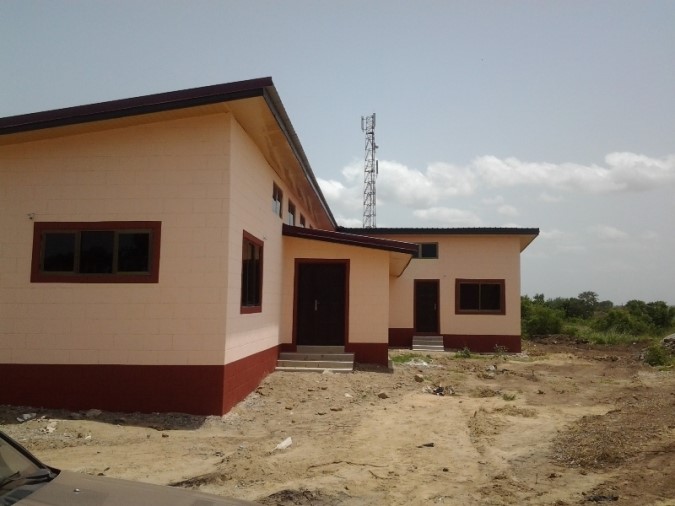
I am so proud that we have built a multi-purpose youth and community development center in one of the fishing villages, Nyanyano. Here, over 70 young women get trained on various entrepreneurial skills, afterschool programs help improve the academic performance of hundreds of children each year, and young footballers train in the soccer training facilities. Also, we host numerous community health educational events throughout the year.

My motivation in life is that all people deserve to be happy and live meaningful lives.

Through my years on earth, I have learned that regardless of the material resources that humans strive to obtain, I have never seen the richest people die and be buried with even a car or an airplane. Therefore, I have concluded that we will leave everything behind one day, but joy and fulfillment is to see fellow humans happy and feel uplifted or supported. There is so much joy in my heart when I see others happy and successful, especially those with less privilege.

Academic Partners

  • University of Washington

Fun Facts

What reciprocity looks like for me

The first few words or phrases that come to mind when I think about reciprocity include: the same treatment, equal opportunities, and balanced power and respect. Reciprocity within nonprofit management and study abroad programs means that both leaders and students from the Global North and Global South begin to understand the fundamental truth that we are equal humans and deserve equal dignity and respect for our knowledge and ideas irrespective of the differences in resources. 

Since joining the Global Reciprocity Network, I have witnessed an intentional effort of power balance and mutual respect between partners and members of this network. Through this network, partners from the global south have gained access to teach and share their work with students at the University of Washington. This further deepens the relationship and the respect that exists among us. I believe this is the fruit and operationalization of intentional and genuine respect for all. 

I feel more like part of a family, more than just partners. Through our monthly meetings, we make efforts to check in with each other, what is happening in various countries while exploring deeper collaborations.

Advice I’d give …

Understand that we all come to the table with various privileges, differences in knowledge and skills, and sometimes unclear agendas. However, continuous awareness, commitment, and engagement bring more learning and clarity as you move forward. 

Second, normalize and accept mistakes and grow. Take time to do free writings without overthinking. Until you offer people the opportunity to try or do something, never judge their ability to do it. There is always a first time doing something, and our talents and skills shine through the process.

If I was an animal, I would be …

I would be a cat for two reasons. First, a cat can sense both good and bad from afar and prepare a mitigation plan — always thinking ahead or futuristic. Secondly, the sights that would make a dog bark, the cat will just blink an eye. This makes the cat more grounded, confident, loyal, healthy, and wise in its ways.

My secret talent is

I play the keyboard/piano and bass guitar professionally in a band.

My favorite book of all time is …

Things Fall Apart by Chinua Achebe

My favorite thing to eat is …

A combo of Jollof rice, ripe plantains, and fish.

My favorite place to be is …

Accra, Ghana

Connect with Eric

email
instagram
facebook

Connect with Eric’s work

Cheerful Hearts Foundation
Cheerful Hearts Foundation’s Instagram
Cheerful Hearts Foundation’s Facebook
Patriots Ghana’s website
Patriots Ghana’s Instagram
Patriots Ghana’s Facebook

Filed Under: Our Network, Stories Tagged With: bio, biography, profile, stories

Footer

Collaborating More Equitably in an Unequal World

© 2025 The Global Reciprocity Network | Website design: SNC

Collaborating More Equitably in an Unequal World
© 2025 The Global Reciprocity Network | Website design: SNC